Designing for privacy and security in the homestead
Moving out to the country includes a few adjustments – the good and easy of it is that most of these adjustments will align with your personal values, as you will find out soon. I designed our homestead to keep my family safe and secure. It is a home, not a bunker, but it is a much more defensible and safe home. Let me explain some features I designed into the home:
- Visibility
- Shelter
- Limited Access
- Extra secure areas
We’ll focus on just on the house in this discussion and how we can design for the adequate (or more than) level of security for our homestead.
VISIBILITY
Good visibility around your homestead is important—not just for enjoying the view, but for security and everyday life. Your home should be designed so you can easily see what’s happening across your property, whether it’s someone coming up the driveway, animals getting into trouble, or kids playing on the other side of the house.
Ideally, indoor and outdoor spaces should work together. A kitchen window overlooking the yard; a nook that can shift to an outside patio in good weather; a door/window that has strategic view of your driveway. These all sound trivial, but it has to be designed intentionally into your home so that your lifestyle is not held back by the home’s limitations.
A thoughtful design like this makes daily life easier while keeping your family safe and aware of what’s happening outside.

You want to see if someone is approaching your home before they get there.
SHELTER
Texas weather can change in an instant. One minute, the sun is shining, and the next, a thunderstorm is rolling in. Tornadoes, straight-line winds, and sudden storms are just part of life here, so being prepared isn’t just a good idea—it’s essential.
A traditional storm shelter, whether inside your home or as a separate structure, is one option. But for a homesteading family that values practicality, a multipurpose shelter can be even better. By reinforcing everyday spaces—like a pantry, mudroom, or closet—you’ll have quick access to safety without adding an extra structure. I design these spaces so that you can enhance them later without significant impacts to your home; you can phase it in or you can retrofit when you feel it is needed. These shelters blend into your home’s design, serving a purpose year-round while giving you peace of mind when storms hit.
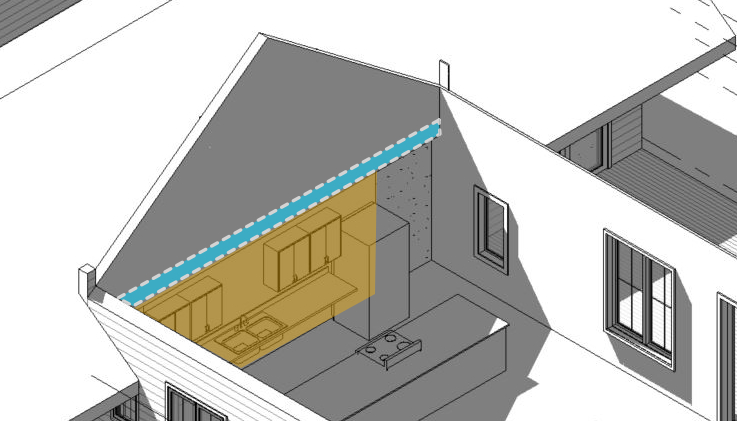
Designing so that there is structural redundancy in your home requires special insight.
LIMITED ACCESS FOR UTILITY WORKERS/DELIVERIES
Privacy and security matter, especially for a family that values independence and a peaceful way of life. A well-designed home should limit the areas where delivery drivers, service workers, or unexpected visitors need access. You’d be surprised how many new homes don’t take this into account.
By planning entry points carefully, you can keep your home more private while still making everyday life convenient. A designated delivery area or a secure drop-off spot lets packages arrive safely without needing to answer the door. This way, you get to decide when you’re up for a quick chat or when you’d rather go about your day undisturbed. A little forethought in design can help balance hospitality with personal space, so your home stays both welcoming and secure.
BEDROOM WING IS EXTRA SECURE
Keeping the bedrooms separate from the rest of the house—with extra security features—helps me sleep better at night. Knowing that the house itself is secure, plus having extra layers of protection before anyone could reach the bedrooms, gives us more options to respond if needed.
A strong, reinforced door leading to the bedroom hallway adds another barrier. Behind this is a space (and time you gain) to prepare and respond. You can defend from a safer position or you can also go out a back door and take your family to a safer place altogether. I would also lay out the plan so that it will be advantageous to you in the first place, from a defense and safety perspective. These small but important details can make a big difference in home security.
There are many ways to design a home for both privacy and safety, but most builders and designers don’t think about them. It takes a different mindset—one that comes naturally to those of us who take our family’s protection as a personal responsibility.
Take yours seriously. Let’s build that ark together.
-Chris
 Alt-Ark